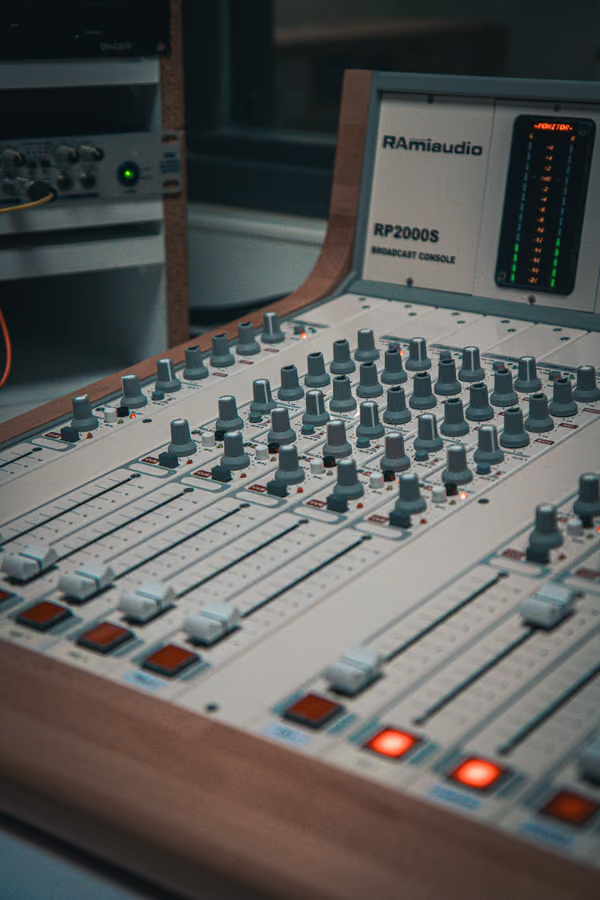
In mastering, analog tape is a tone and dynamics stage. Used quietly, it can make a finished mix feel denser, smoother, and easier to leave on before the final loudness step. The useful part is knowing where it sits in the chain.
Where does tape go in a mastering chain?
Tape usually works best after corrective cleanup and before final limiting. In a typical chain, you would fix obvious EQ problems first, print the mix through tape for saturation and glue, then use final loudness control afterward. Tape can reduce peak sharpness and add harmonic density, so the limiter does not have to work as aggressively.
What does tape change during mastering?
A good tape stage affects several things at once: it adds low-order harmonics, rounds fast transients, creates gentle compression, softens brittle highs, and can add a low-frequency head bump depending on speed. That combination is why people describe tape mastering as warm, glued, finished, or analog.
Hear it before you read more
Download the pack, or play the before and after samples.
When should you avoid tape on a master?
Go easy if the mix is already dark, congested, or over-compressed. Tape works when the mix already translates and needs final density, smoother edges, or a more cohesive presentation. If you hear obvious distortion on the full master, back the drive down.
Can you build a tape mastering chain without hardware?
Yes. A modeled tape engine can recreate the main behaviors of a reel-to-reel machine, with recall and a quiet floor. Tape DSP also runs in the browser, which is handy for quick master prints, stem processing, and comparisons against the clean original. Broader workflow: how to master a song online with tape.
A simple mastering chain to try
- Export a clean 24-bit or 32-bit float mix with headroom.
- Use subtle tape drive until the master feels denser but not distorted.
- Choose speed for low-end shape: slower for weight, faster for tighter lows.
- Check a level-matched A/B so loudness does not fool you.
- Finish with loudness and true-peak control for delivery.
FAQ
Should tape come before or after the limiter?
Put tape before the final limiter in most mastering chains. Tape rounds peaks and adds density, then the limiter controls the final loudness and true-peak ceiling.
Is tape mastering only for vintage music?
Subtle tape works on modern electronic, pop, hip-hop, rock, and acoustic music. It adds cohesion and smoothness even when you want a contemporary finish.
Want to hear the difference on your own audio? Download the pack, or hear your finished mix mastered through tape in Tape Mastering, level-matched against the original.
Next step
Download the pack. When a song is done, master it through tape with Tape Mastering.