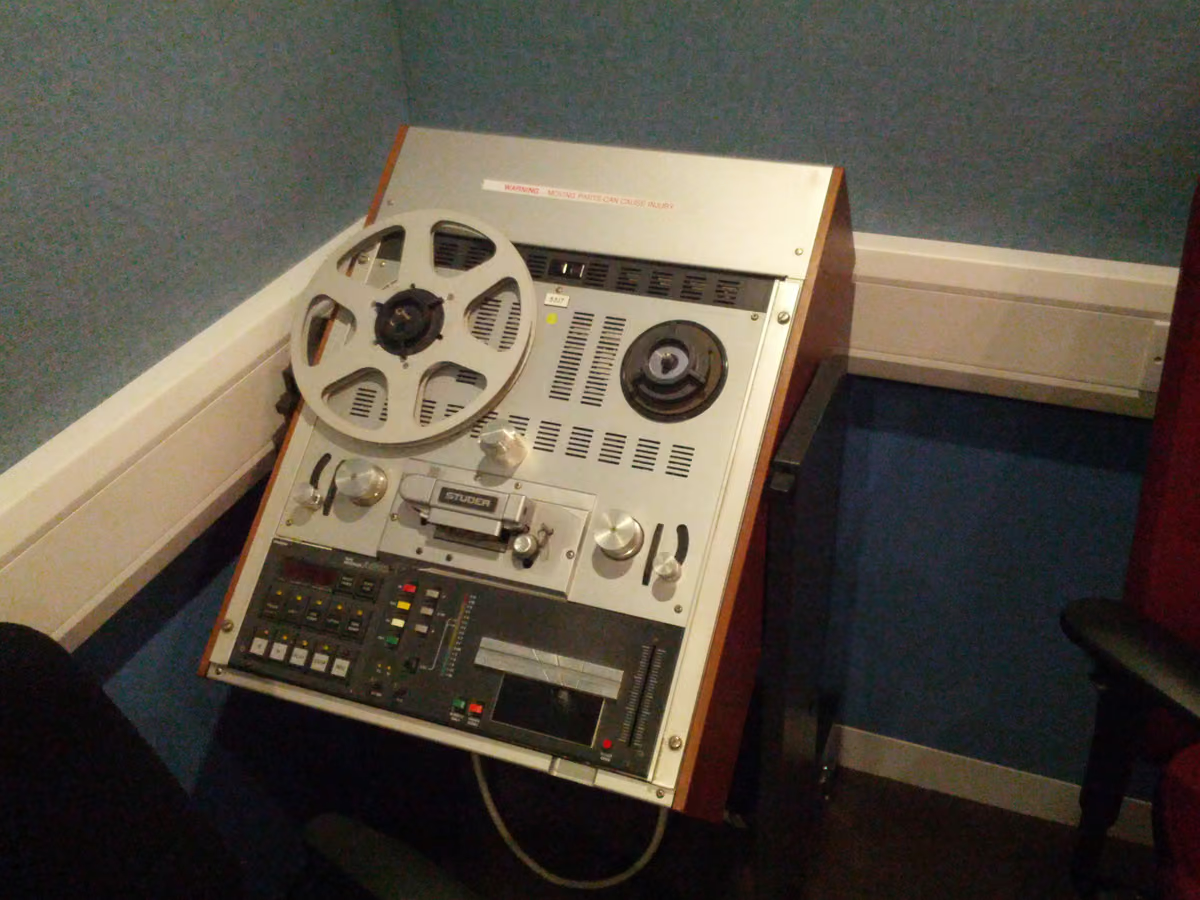
A real tape machine is a beautiful instrument. The useful question is whether the tool gives you the tone, control, reliability, and recall your workflow needs.
What does real tape give you?
Hardware gives you the full mechanical system: tape formulation, heads, bias calibration, electronics, transport behavior, noise, and maintenance history. It can sound incredible, especially in a room built around it. It also requires alignment, tape stock, upkeep, and repeatable gain staging to stay useful.
What does a tape plugin or online tape engine give you?
A modeled engine gives you repeatability, instant recall, and easy A/B comparisons. The best ones model multiple tape behaviors: saturation, compression, high-frequency loss, head bump, bias behavior, and movement. That is why a modern engine can be a serious tape plugin alternative.
Hear it before you read more
Download the pack, or play the before and after samples.
Which sounds better for mastering?
The better choice is the one you can use quietly and reliably. A perfectly maintained machine can be stunning. A poorly aligned machine can dull, smear, or distort a master. A good modeled engine is consistent, which helps when you iterate, revise, or work remote.
When should you choose each?
- Choose hardware when you have access to a calibrated machine and want the full physical process.
- Choose software or online tape when you need speed, recall, low cost, and consistent results.
- Choose browser tape when you want to print stems or masters without installing a plugin.
FAQ
Can a tape plugin replace a Studer or Ampex machine?
It can replace the practical role for many workflows, especially stem processing and mastering prints. It will not replace the physical experience or every quirk of a specific machine.
Is online tape lower quality than a plugin?
Not inherently. If the engine oversamples and exports high-resolution WAV, browser processing can be as serious as a native plugin while keeping CPU work off your computer.
Want to hear the difference on your own audio? Download the pack, or hear your finished mix mastered through tape in Tape Mastering, level-matched against the original.
Next step
Download the pack. When a song is done, master it through tape with Tape Mastering.